The Blackbird

Monday, 28 March 2011
I was trying to avoid doing a big-hitter, but..well, sometimes you just HAVE to. The Blackbird was a 1976 release - it's the best year, don't you know? - for the boys, and the tune is an old, West-country folk song, but apparently the Wurzels couldn't find the original words, so wrote their own version.

iPod? Bah, humbug.
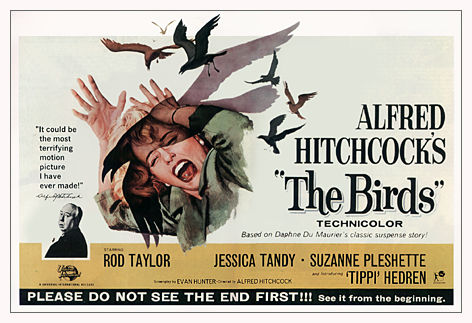
On the surface, this is a pretty average sort of song - a man who feels he's being persecuted by a songbird. An idea that seems rather ridiculous in it's own right, but could possibly have maybe been the inspiration for Alfred Hitchcock when he directed the classic The Birds.  Certainly, it's not impossible that Adge and the boys took their inspiration from the 1952 novella The Birds by Daphne du Maurier - by itself, a warning that there is only so much nonsense that Mother Earth will take before she unleashes her battalions upon us. 
Oh noes! Birdies!
Could this seemingly simple song foresee our destruction at the hands of an animal nation?

No.

Could it be a chilling message about our delicate ecosystem, and the thousands of songbirds who are threatened by loss of habitat, pesticides, predators and an increasingly inhospitable environment?

"Where be it Blackbird to?"

No.

Could it, perhaps, be a metaphor for a person of unsound mind, sinking further into paranoia and insanity, convinced that a simple blackbird is persecuting him, targeting him, and mocking him?

"No longer can I sleep at night/get peace of any kind/That bird'll be the death of me/he's prayin' on me mind"

No.
Oh no. It's WAY deeper than that.

Let's see it in it's full glory:


Chorus:
Where be that Blackbird to? I know where he be,
He be up yon Wurzel tree, And I be after he!
Now I sees he, And he sees I,
Buggered if I don’t get ‘en
With a gurt big stick I’ll knock ‘im down
Blackbird I’ll ‘ave he!
La la la la la la
La la la la la la
‘Ow’s ‘E Father?
 - Alright!

All me life I’m on the farm, workin’ for me keep
Tendin’ pigs and chickens, and they cows and sheep
But everywhere I’m workin’, there’s one who always mocks me
He hidin' somewhere in the trees, blackbird I’ll ‘ave ee!

Chorus goes here.

Underneath the open sky in spring we loves to dine
We likes to ‘ear the flappin’ of the missus washin’ line
We listens to a tuneful song, a blackbird or a tit,
But on me vest and underpants he scored a direct hit!

More chorus!


If I goes out poachin’, a creepin’ through the fields,
With me old retriever, a followin’ at me heels.
If I aim me shotgun at a pheasant in the hay
That bloody blackbird starts his row and frightens him away!

Zomg, chorus.

No longer can I sleep at night, get peace of any kind,
That bird’ll be the death of me, he’s prayin’ on me mind!
If I chase him long enough, I’ll get ‘en by and by,
And celebrate me vict’ry with a girt big blackbird pie!


I SEE IT!
The lyrics are in fact structured to bring about a fuller understanding of our own thought processes and to enable us to realize shortcomings in our egocentric thoughts. By using the signifier blackbird, repeated in each of the verses, we are guided through a process of self questioning. Separately, the verses are similar to Zen koans, designed to shatter your method of thinking to bring about enlightenment. Yet as a whole this piece seems gently to nudge you into the Wurzel's way of thinking, rather than shoving as Zen propounds.

As the chorus states: Where be it Blackbird to?

According to the words, the blackbird resides in the wurzel tree, watching us, perhaps mocking, yet unreachable through force and confrontation.

The Wurzel's blackbird represents ourselves - our true selves - the soul, the spirit, call it what you will. Always in the background, always demanding our attention - but just as we believe we are close enough, it takes flight, to higher branches.

This seems strongly to suggest a trinity of the conscious mind, perhaps such as Freud suggested, the id, ego and superego. Adopting this reading, we may go further on to say that the tree represents the framework of our mind - the physical body, our brain, perhaps even knowledge.
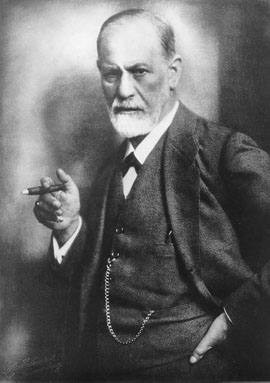
Why, yes. I did just compare the Wurzels to Freud.
The blackbird represents what we cannot have, cannot touch - and urges up to keep reaching for it in order to reach our true potential - whether through work - "All me life I'm on the farm/Workin' for me keep/Tendin' pigs and chickens/And they cows and sheep."

However work is not the answer - and the ever-elusive blackbird takes flight as the farmer tries to reach it.

Perhaps through the appreciation of the world around us? "Underneath the open sky/in spring we loves to dine/We likes to 'ear the flappin/of the missus/washin' line/We listens to a tuneful song/a blackbird or a tit"

Perhaps a little closer?

"But on me vest and underpants/he scored a direct hit!"

Bullseye! ..actually, bird poo.
Perhaps not.

The farmer once again, attempts to connect with him, taking to the fields - returning to his more, basic, hunting instincts, in the hopes of achieving his goal.

"If I goes out poachin/a creepin' through the fields/With me old retriever/a followin' at me heels/"

However, much like in The Deerhunter, the 'blackbird' starts his 'row', and the hunter does not get his kill. He hails the blackbird as an equal or even an influence to the outcome of the hunt - a powerful tribute to the blackbird, and to nature.

Oh God, BAMBI! NOOOOO!

"If I chase him long enough/I'll get 'en by and by/And celebrate me vict'ry/wit a girt big blackbird pie"

And there the farmer finally realises the key to his goal. To capture the blackbird he will need learning, experience, enlightenment, dedication, perseverance and understanding. Until we are living to our full potential, the blackbird of our soul will not be silenced, and will continue to sing and mock at us - small, insignificant, but impossible to ignore.

The Blackbird is a a song deeply involved with philosophical problems as they relate to man and his universe. It urges us to reevaluate our mindset in relation to living in an ordinary, mundane world, and counsel us in using an open mind and creative visualisation in order to bring about a conscious bond between the causal and seemingly acausal relationships enjoyed by every object and living being involved in the dance of life.


Wheeeee!
It urges us to be true to ourselves, to keep reaching for the impossible and to keep pushing ourselves.

For are we not all searching for our own blackbird?

Pill, Pill

Thursday, 17 March 2011
Ah, my other current-favourite Wurzels track, another one by Adge and on the surface, an ode to a small ferry, which used to run from the small village of Pill in North Somerset, across the River Avon. The track was first recorded at the Royal Oak session in 1966, and included on the EP Scrumpy and Western, released in February 1967.


Clearly, a tribute to a small but vital line of transport in the early 1960s.

..or is it?

Here's a photograph of the Pill ferry. Isn't it lovely and rural and quaint?


Now, replace that image with:


And suddenly all becomes clear.

This song is a shocking description of drug issues in rural communities, comparable to Lou Reed's Perfect Day and Bob Dylan's Hey, Mr Tambourine Man.

Let's look a little closer, shall we?

When the nights are dark and stormy
And the bitter north wind blows
Cross the fields from Shirehampton
Where the muddy Avon flows
Where the Pillites gaily ride
Over on the ferry from the other side
The boat starts swingin'
You'll hear them singin'
Float in on the tide.

Stock image for teh win!
A dark and stormy night, apparently - or is it simply dark and stormy in the narrators head? In the grip of depression, the hapless man is forced to 'ride the Pill ferry' (A little like 'chasing the dragon') over the muddy waters of his mental state to the 'other side'. Across the 'other side' of this metaphorical river, of course, is a safe, warm place, where everyone is happy and singing - suggesting this particular Pill 'ferry' is Ecstasy.

Despite the desperate need for a quick fix, the narrator knows his habit is unhealthy - indeed, as he waits for the effects of the drug to kick in, he laments: "Pill, Pill, I love thee still/Even though I'm leaving" - a cry heard from addicts all over, that this is one last drink, one last fix, and then they will kick the habit. Despite his intentions, the  "rain down pours/the thunder roars/The lightnin' flashes bright" - another insight into the mind of this depressed individual, who admits that the lesser of two evils - a night down the pub - would probably be better for him: "I'll be better by far in The Duke or The Star/Than on the Old Pill Ferry tonight".
Although, while alcohol is, of course, legal, unlike the 'Pill ferry' - it's worth remembering that the number of alcohol-related deaths in the UK has increased since the early 1990s. On average each person in the UK drinks an average of 8.4 litres of alcohol a year. Just say no, kids.


Take me where it's warm and cosy
Down there with those happy boys
Where the cheeks are red and rosy
Cobblers, hobblers, hobbledehoys
When the stinging winter sleet
Creeps along the riverside and chills your feet
For miles around, you'll hear this sound
Comin' down Pill Street

Waiting for his fix to kick in, he begs "Take me where it's warm and cosy/Down there with those happy boys/". He lists the terrifying side-effects of Ecstasy, including constriction of blood to the extremities* "When the stinging winter sleet/Creeps along the riverside and chills your feet", and yet, despite the dangers, despite the side effects, all he can hear is the call of the drug: "For miles around/you'll hear this sound/Comin' down Pill Street".
Drug users often get cold feet and have to wear slippers*

On the seven seas I've wandered 
Back to Pill I shall return
When the hard earned cash is squandered
For the local girls I yearn
Captain, Captain, carry me
Steamer of the channel past Portbury
Head her south through Avonmouth
Happy I shall be.

As the drug finally takes effect and the 'ferry' carries him on his journey, he finally admits the depth of his problem, ruefully admitting that no matter how many times he tries to 'leave' his habit behind, he knows he is doomed to return to it during the darkest times of his life:  "Oh the seven seas I've wandered/Back to Pill I shall return/When the hard earned cash is squandered/For the village lads I yearn"

He reaches to the drug, now the captain of his 'ship' - a metaphor for the soul - as it takes him on his short, chemically-enabled journey to happiness: "Captain, Captain, carry me/Steamer of the channel past Portbury/Head her south through Avonmouth/Happy I shall be."
Well, he seems happy enough
This, of course, echoes to Lou Reed's heart-breaking "I thought I was someone else - someone good" in Perfect Day, hinting at the lonliness, self-loathing and desperation that helps to turn people to drugs. As with Perfect Day, in Pill, Pill the object of the singer's affections transforms him - but the change is temporary.

Regardless of the setting, drug represent a serious problem in our communtities - rural youths are particularly at risk for developing substance abuse disorders, as prevention programs and treatment initiatives tend to be in shorter supply in rural areas than in urban settings.

As with Perfect Day, Pill, Pill's subject lurks in the subtext, the lair of the interpreter. Of course, decoding song lyrics carries the danger of  over-interpretation, but with a name like Pill, Pill, sometime the subtext, is quite simply...the text.
If you've been effected by any of the issues in today's Blog entry, you might want to talk to Frank.


*This may not be factually accurate, as I made it up.

The Charlton Mackrell Jug Band

Wednesday, 9 March 2011
I'm going to start with my current favourite Wurzel song - The Charlton Mackrell Jug band.

Written by the sadly-now-deceased Adge Cutler, it initially appeared on the 1968 album Cutler of the West.

On the surface, the song is a whimsicle number about the formation of a jug band and their trials and tribulations as they attempt to make a name for themselves.
Charlton Mackrell. Actually a real place.

However, digging a little deeper, it's clear this song is a vicious political commentary on a lack of funding and provision for musicians in rural areas. Poor Bernard Mace was forced to use a suitcase instead of a double bass, Amos Draper - who could have been a very talented musician has to be content with a comb and piece of paper, and the borderline alcoholic Arnold Slugg (who's alcoholism is bad that he's "barred from all the locals") bases his entire musical career on blowing into a jug. Only the song's narrator - clearly from a middle-class - family can afford a real instrument, and promptly - and egotistically - proclaims himself 'the star' on guitar, harmonica and vocals. Typical lead singer, seeking the spotlight and saving the best for himself.
Playing a traditional cider jug. This is NOT Arnold Slugg, as it's clearly an actual, real-life person in a lovely hat.

Now I always planned to make this band the very finest in the land,
So we had to hold auditions, for to find the best musicians,
Some who played, they made the grade, some they played like 'ell,
I picked the best in all the West, and yere's the personnel:
There's Bernard Mace on his old string bass made from a girt big packing-case,
Along with 'e goes Amos Draper, wizard of the comb and paper
Arnold Slugg loves the jug, barred from all the locals
And I'm a star on my guitar, harmonical and vocals!


Already something of a control freak - "I always planned to start a band/the very finest in the land" - the singer auditions people, seeking those he believes can help catapult him to the vacuous, heady heights of stardom - since apparently they didn't have reality TV shows in those days.


What was worse, and made us curse, was findin' somewhere to rehearse
Neither of the pubs would wear us, 'cos it seemed they couldn't bear us!
Folks all laughed, and called the staff, we took it on the chin -
We was always fond of the old duck pond, till they threw us in!
There was Bernard Mace, he sailed through space, followed by his old string bass, 
Amos Draper he did try to keep 'is roll of paper dry,
Arnold Slugg went "Glug, glug, glug" and very quickly sank,
And my gumboots were full o' newts when I reached the other bank!


The enterprise does not start well - in an all too common scene across the country, the band are unsupported and mocked by their community, culminating in a shocking mob attack which sees the aspiring band thrown into the duck pond, with Arnold Slugg narrowly escaping with his life ("Arnold Slugg went 'glug, glug, glug' and very quickly sank'). The villager's violent act also puts a protected species at risk, as the narrators boots are "full of newts" - a contravention of EU law, as well as the Wildlife and Countryside Act - when he makes his terrified escape from the pond.
Angry, from Charlton Mackrell.

Now we haven't been barred from the old churchyard; there one night we practised hard,
Every man was full of cider, doin' his best with "C C Rider"
Figure in white then come in sight, I thought we'd waked the dead,
But parson Skurt, in his nightshirt, said we'd waked 'e instead!
Then Bernard Mace, with his old string bass, said we better 'ad leave this place, 
Off he blew with Amos Draper, trailin' yards of toilet paper,
Arnold Slugg, with his two-gallon jug, for speed was not designed, 
I ran like a fox, but the parson's boxer followed I close behind!


However, undeterred, the band - now unable to find rehearsal place - no doubt due to government cuts and a lack of provision for the arts in rural areas - are forced to practice in a churchyard. Again, the group are chased away - this time by a vicar with a particularly vicious dog - ("I ran like a fox, with the parson's boxer following close behind.")


Then one day, old farmer Grey, come to me and this did say
All 'is beasts like music playin', and would we kindly serenade 'em?
Off we sped to the old cowshed, the cows they did adore us
They wagged their tails and banged their pails, and joined in every chorus!
Then Bernard Mace and the old string bass, a girt big jersey licked his face,
'Nother got attached to Amos Draper, chewed up 'alf his roll of paper,
Filled the jug of Arnold Slugg, 'is kindness to acknowledge,
And I got a kiss from a pretty young miss in the Agricultural College!


However, there is some hope for the group when they are approached by Farmer Grey, who has a proposition for them. Apparently he's an educated fellow and read of research carried out by psychologists at the University of Leicester, who found that each cow's milk yield rose by 3% (0.73 litres [1.54 pints]) a day when music was played to them. In what is clearly a metaphor of the music industry, the 'farmer' believes that he can exploit the band and ensure added profits from the herd - a rather obvious metaphor of popular music fans. ('cash cow' coincidence? I think not) and offers them rehearsal space in his cowshed.

Damn, I love this film.
So, in one week we quite uniquely topped the charts in the farmer's weekly,
Play your cows our rhythm and blues, you'll get three times more milk than usual,
We got plans, and lots of fans, no rivals do we fear -
'Cos every cow knows Mumma don't allow no jug band music in here!
Now Bernard Mace has a shirt of lace, and 'is hair completely 'ides his face,
So does that of Amos Draper, gets between 'is comb and paper,
Arnold Slugg 'as an empty jug, broke our mothers' hearts,
We look so queer in all this gear, since we 'it the charts!


Believing the farmer is doing them a favour, the band play and the 'farmer' begins to rake in a small fortune from the herd. Here the song takes a darker turn as they succumb to the trappings of fame - the 'herd' respond to the band and the music, and they begin to believe their own hype, falling into a murky word of groupies ("And I got a kiss from a pretty young miss at the agricultural college.."), fame and yes men.

Their ascent to fame is fast and violent - in the space of a week they top the charts (in The Farmer's Weekly) and spawn rivals within the industry. Although the band claim not to take them seriously (We've got plans, lots of barns/No rivals do we fear..") they are clearly not secure in their new-found fame and feel the need to take on an edgy, new image to keep themselves in the public eye.

Bernard Mace shows his lack of self-esteem by growing his hair and wearing an outrageous lace shirt - by keeping the attention on his clothing, it helps to keep his critics attention away from his appearance and musical talents. Amos Draper takes a similar approach, so driven by his need to create a physical barrier between himself and his audience that he adopts long hair, hanging in his face - despite the fact it detracts from his musical performance - ("Getting in between his comb and paper.")

The borderline alcoholic, Arnold Slugg, has embraced his addiction - even celebrating it with a pop art jug, estranged from their concerned families, the narrator cheerfully admits that they've "broke our mother's hearts."
"He used to be such a good boy, before he got involved with jug bands.."
Like anyone in the public eye, the band find themselves under relentless scrutiny - with questions raised over their sexuality and their physical appearance - ("We look so queer in all this gear/Since we hit the charts.") - with little attention on their performances or musical ability. The band become a commodity, a brand - surrounded by yes men and beginning to believe their own hype.

The 'farmer' has proven to be useful in connecting the musicians with the right resources and people for everyone to succeed - but he is ruthlessly all about the money.  While as long as the band enjoy success they will be worshipped, the moment their popularity wanes and the tide turns against them, they will be dropped by the farmer, left to fend for themselves and most likely end up being found dead in a hotel room, dressed in ladies underwear and with a piece of fruit stuffed into one orafice or the other.

A strong warning, indeed. This song is a statement no less eloquent than Lady Gaga's meat dress, or Prince turning up at an awards ceremony with 'Slave' written on his cheek in biro and trying to pretend he didn't miss out the 'V'.
"S-l-a-e... damn. No, it's ok. I'll put the V there. People will think it's artistic."
Ladies and Gentleman, I give you: The Charlton Mackrell Jug Band - a damning commentary on the lack of arts provision in rural areas, tickling the dark underbelly of violence in rural communities and a warning about the music industry and the effect it has on our young people and aspiring musicians.

Don't have nightmares.

I couldn't find the original version, but here's a passable cover , that I'm not allowed to embed here. Grrr.

So, uh. WTF?

The Wurzels. I suggest you just accept them as your overlords and get on with it.
The Wurzels. Four cheeky chappies from Somerset. A novelty act. Scrumpy and Western Legends who like to crowbar animal noises and references to zider into every song.

But is there more to the west country warblers?

I am an unabashed Wurzel fan, and in listening to their songs over the years, I've come to the conclusion that beneath the laughter are darker observations of every day life in the West Country.

Their music tackles the thorny issues of immigration, mental illness, the cult of celebrity, bestiality, our failing educational system, and the collapse of family - in short, everything that a string of newspapers insist on calling 'Broken Britain'. Yet their wisdom has been largely ignored by more fashionable musical political commentators, like Billy '£1.5 million house' Bragg, 'really annoying' Bono and Bob Marley. (Yeah, I got nothing on him.)

No more.

In a career spanning more than 40 years, the 'farmyard four', as they are known by their legion of screaming fans, have used novelty songs to shine a spotlight on the darkest parts of society and been wrongly dismissed as a harmless novelty act.

The group has used music to tell stories of the social injustices carried out on rural societies across the UK and I intend to use this blog to celebrate it.

The Wisdom of the Wurzels has been ignored for too long. I intend to put that right, or die trying.

..or at least have some fun while I'm doing it.
 

Browse

Total Pageviews